
Realtors will tell you about the schools and the restaurants. As movers in Louisville, we notice different things: how wide the street is, whether a 26-foot truck can turn around, how many stairs sit between the front door and the curb, and whether the staircase has a turn at the bottom that a sofa won't clear.
Louisville has a remarkable range of housing for a city its size, and it changes character every few blocks. Here's what the main areas mean for the day you actually move in.
Old Louisville
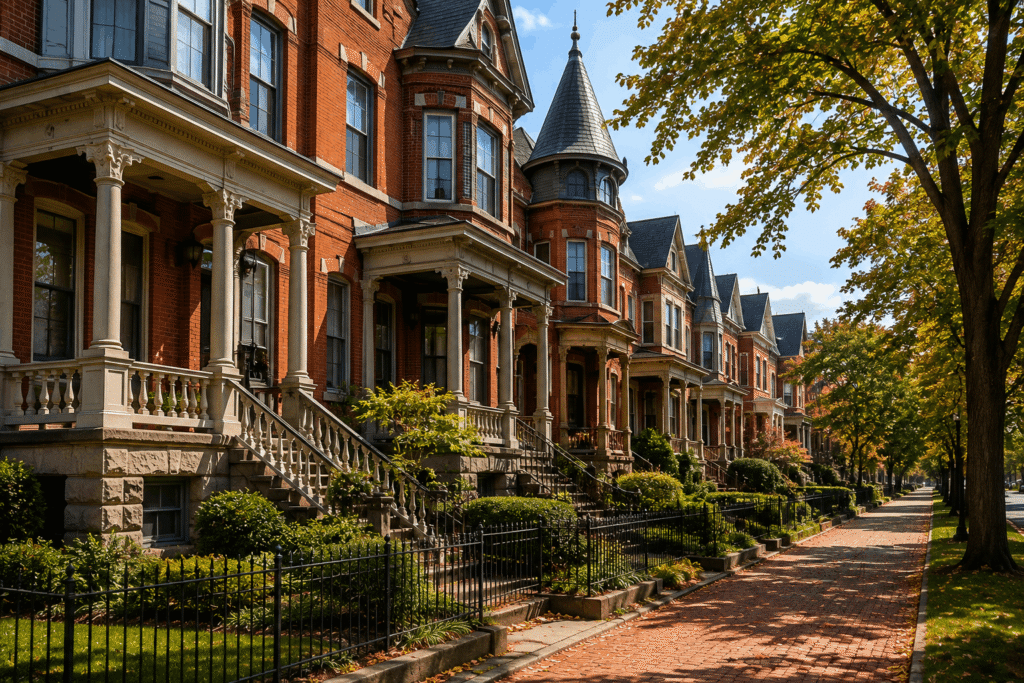
One of the largest Victorian preservation districts in the country, and by some distance the most demanding area we work.
The houses are tall, narrow, and beautiful, with staircases built when furniture was made to come apart and go up in pieces. Landings turn tighter than they look. Doorframes have no clearance to spare. Many of the larger homes were subdivided into apartments decades ago, which means a third-floor unit reached by a staircase that was never designed for it.
Street parking is the other variable. A truck usually can't sit directly outside, so the carry is longer than the photos suggest.
What it means for your move: budget more time than the square footage implies, and expect furniture to be disassembled rather than carried whole. If you have a piece you're unsure about, ask before move day rather than on it.
The Highlands, Germantown, and Schnitzelburg
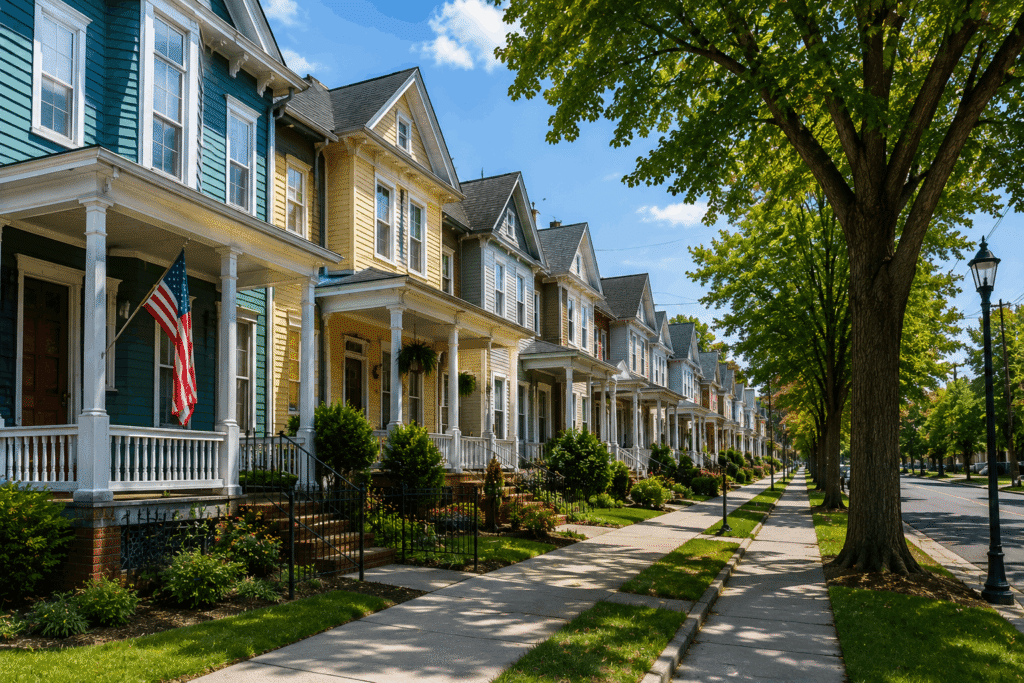
Shotgun houses are Louisville's signature, and these neighborhoods are full of them. Long and narrow, one room leading into the next, no hallway to speak of.
They're a distinctive kind of move. There's no way to work around a tight spot, because there's only one route through the house. Crews carry in single file, and a sofa that catches in the second room holds up everything behind it. Bardstown Road and the surrounding streets also bring traffic and limited curb space, which is worth timing around.
Cherokee Triangle sits at the northern end with larger Victorian homes closer in character to Old Louisville.
What it means for your move: clearing a path from the front door through to the back before the crew arrives matters more here than anywhere else in the city.
Crescent Hill and Clifton
Older homes along and around Frankfort Avenue, mature street trees, and driveways built for smaller vehicles than a moving truck.
The houses themselves are usually manageable. The constraint is outside: low branches, narrow driveways, and streets where parking a full-size truck takes some planning. It's rarely a problem, but it's rarely something you can leave until the morning either.
Downtown, NuLu, and Butchertown
Converted warehouses, loft conversions, and newer buildings, which puts you in a completely different category.
Here the building is the job. Freight elevators need reserving, often in fixed time blocks. Loading docks have their own hours. Management companies frequently require a Certificate of Insurance before a crew is allowed in, and some buildings restrict moves to certain days entirely.
None of it is difficult. All of it needs arranging in advance, and it's the single most common reason a downtown move starts late.
What it means for your move: find out your building's rules the week you sign, not the week you move. Tell your movers what's required and let them handle the paperwork.
St. Matthews and the Near East End
Denser than people expect. Alongside the single-family houses there's a lot of condo and apartment stock, plus older ranch homes on established streets.
Condo and apartment moves bring the elevator-and-loading-zone questions from downtown, in a smaller format. The houses are generally straightforward, though older driveways and mature trees can limit where a truck sits.
Lyndon, Hurstbourne, and Douglass Hills sit nearby with a similar mix.
Middletown, Jeffersontown, and the East End
This is where the city opens up. Mid-century ranches with tight interior stairs, newer subdivisions with wide driveways and easy access, and a substantial number of apartment and townhome communities along the Shelbyville Road and Old Henry Road corridors.
The variety is the point: two houses a mile apart can be entirely different jobs. What they share is space, which usually makes them the most efficient moves in the metro.
See our page for Middletown.
Anchorage and Prospect
Large homes on large lots, and access becomes the whole question.
Long private drives without turnaround space. Low tree cover over narrow lanes. Homes set well back from the road, which makes for a long carry regardless of how good the driveway is. Anchorage in particular has streets with no sidewalks and no lighting by design, and houses old enough that the floors and staircases need protecting as carefully as the furniture.
These are also the homes most likely to exceed a single truck. One 26-foot truck holds roughly 1,600 square feet of normally furnished space, so a large house here is often a two-truck job - which changes the schedule rather than just the price.
What it means for your move: get someone to walk the property before quoting. A phone estimate on a house like this is a guess.
South and Southwest Louisville
Fern Creek, Okolona, Valley Station, Pleasure Ridge Park, Shively. Post-war ranch homes and later subdivisions, generally with driveways a truck can use and streets it can turn on.
These tend to be the least complicated moves in the city. The variable is usually what's in the basement and the garage rather than how to get it out.
Oldham County and the Suburbs North
Crestwood, La Grange, Pewee Valley, Goshen. Newer construction, wide driveways, and moves almost always timed around a closing date.
The complication here isn't access, it's sequencing - closings that don't line up, and belongings that need somewhere to go for a week or two in between.
See Crestwood.
Across the River
Jeffersonville, Clarksville, and New Albany are part of the same housing market and a short drive from downtown, but a move there crosses a state line, which makes it an interstate move rather than a local one.
New Albany's Mansion Row has some of the largest historic homes in the metro area. Jeffersonville's downtown has similar nineteenth-century stock on tight streets. Clarksville is mostly post-war and apartment communities, and generally the easiest of the three.
The Common Thread
Whatever the neighborhood, the same thing decides how the day goes: whether anyone looked at the access before the truck arrived. Stairs, driveways, doorframes, elevators, and parking are all solvable when you know about them in advance and all expensive when you don't.
That's what a free estimate is for, and we cover every part of the metro. Get in touch - no charge, no obligation, and a written price before you book.